
New Housing Safety Rules: Understanding Awaab’s Law and What It Means for You
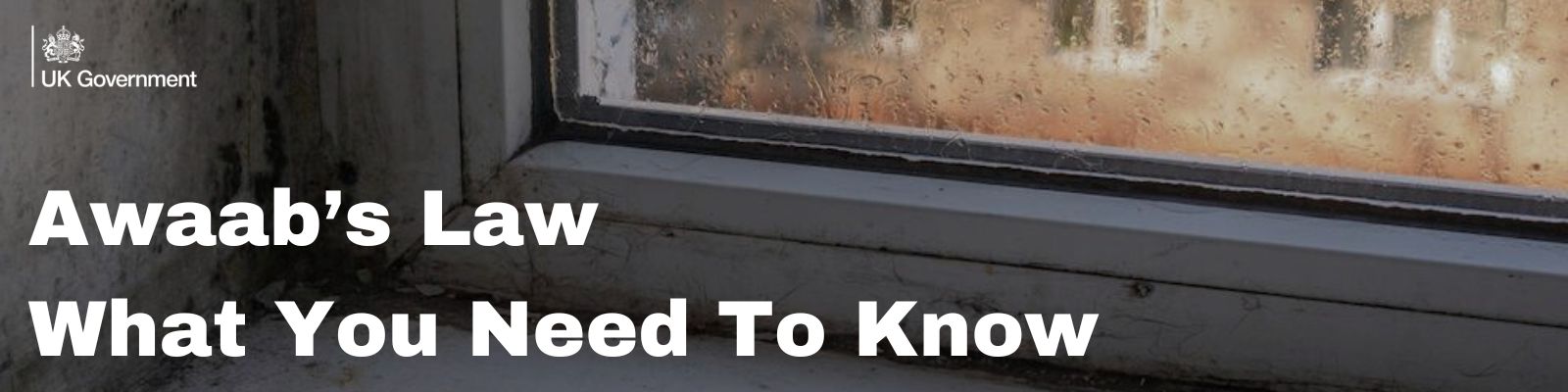
New Housing Safety Rules: Understanding Awaab’s Law and What It Means for You
Awaab’s Law represents one of the biggest changes in UK housing safety in recent years. It was introduced to protect tenants from the dangers of damp and mould and to make sure that landlords take swift, effective action to maintain safe living conditions.
The law is named after Awaab Ishak, a two-year-old boy from Rochdale who tragically died in 2020 after prolonged exposure to mould in his family’s home. His death exposed serious failures within the housing system and prompted the government to create new, stricter rules for landlords.
Awaab’s Law was brought in under the Social Housing (Regulation) Act 2023 and forms part of a broader campaign to improve standards in social housing across England. It establishes clear legal deadlines for landlords to investigate and repair damp and mould issues once a tenant reports a problem. By turning what used to be guidance into law, the government aims to stop the delays and neglect that have left thousands of tenants living in unsafe, unhealthy homes.
Under the new housing safety rules, landlords must investigate any reports of damp and mould within a fixed number of days and start repairs shortly afterwards. These deadlines will be legally binding, and failing to meet them can lead to enforcement action. The draft guidance published by HM Government in 2024 sets out these responsibilities in detail, and the law is expected to take full effect in 2025.
The purpose of Awaab’s Law is simple: to make sure every tenant lives in a safe, dry, and healthy home. For tenants, this means stronger rights, faster action, and better accountability from landlords. For landlords, it means new legal duties, documentation requirements, and penalties for inaction. The law applies primarily to social housing landlords such as councils and housing associations, but its influence is expected to extend to private landlords as well.
Damp and mould are far more than aesthetic problems. They cause respiratory illnesses, skin conditions, and allergic reactions, and they can be especially dangerous for children, the elderly, and those with asthma or weakened immune systems. The presence of black mould is a serious health hazard, not just a sign of poor maintenance. Awaab’s Law treats damp and mould as urgent safety issues, placing legal responsibility on landlords to deal with them quickly.
For tenants, Awaab’s Law offers a clear process for getting help. Once you report damp or mould to your landlord, they are legally required to respond and investigate within a fixed timeframe, usually around 14 days. If repairs are needed, the landlord must begin work within another set period—often seven to fourteen days after the inspection. You will also receive written confirmation of the inspection results, the planned repairs, and the completion date. If the landlord fails to act, you can escalate the issue to your local council or the Housing Ombudsman, who can investigate and enforce compliance.
For landlords, these new rules require a shift from reactive to proactive property management. Landlords must now ensure they have a proper system for handling complaints, inspecting properties, and documenting repairs. Every report of damp or mould must be logged, investigated, and followed through to completion.
Landlords are also required to maintain communication with tenants throughout the process, providing written updates on actions being taken. This transparency ensures that tenants are fully informed and that landlords are held accountable.
To comply with Awaab’s Law, landlords should:
Establish a clear reporting process for tenants to raise damp or mould issues.
Carry out an inspection within the legal timeframe.
Begin necessary repairs promptly after confirmation of the problem.
Keep written evidence, such as photographs and repair invoices.
Provide tenants with regular progress updates.
Failure to meet these obligations can result in enforcement notices, financial penalties, or regulatory action. Repeated non-compliance could even affect a landlord’s ability to manage housing in the future.
Prevention is also a key part of Awaab’s Law. Landlords are encouraged to take proactive steps to prevent damp and mould from forming. This includes ensuring good ventilation, repairing leaks quickly, installing Positive Input Ventilation (PIV) systems, using extractor fans, and maintaining insulation to prevent condensation.
For tenants, the law provides reassurance that their complaints will no longer be ignored. In the past, it was common for reports to go unanswered or for repairs to take months. Now, clear legal deadlines and accountability mechanisms make sure that landlords act quickly.
The health implications of damp and mould are severe. Mould spores can trigger coughing, wheezing, and skin irritation. For children and vulnerable people, long-term exposure can lead to chronic respiratory problems. The aim of Awaab’s Law is to prevent these situations by making landlords legally responsible for maintaining a safe living environment.
The law also ties into existing housing legislation such as the Housing Health and Safety Rating System (HHSRS) and the Homes (Fitness for Human Habitation) Act 2018, reinforcing the legal requirement for landlords to provide homes that are fit to live in. Awaab’s Law adds stricter timeframes and accountability, ensuring action is taken quickly when hazards are reported.
Builders Superstore supports the principles behind Awaab’s Law by supplying high-quality damp and condensation control products to help landlords comply. Our range includes PIV systems, extractor fans, passive air vents, and damp-proof membranes—all designed to improve air quality and prevent the build-up of moisture in homes.
For landlords, early investment in these solutions can save money in the long run. Tackling damp before it becomes a legal issue helps protect property value, tenant wellbeing, and compliance records. For tenants, it means safer, more comfortable living conditions.
Awaab’s Law is expected to reshape the UK housing sector. Local councils and housing associations will need to update policies, train maintenance teams, and ensure quick response times. Private landlords are also encouraged to adopt similar standards, as enforcement expectations rise across the board.
By taking these steps now, landlords can prepare for the law’s full implementation in 2025. It’s not just about avoiding penalties—it’s about maintaining professional standards and ensuring that no one has to live in unsafe housing again.
In summary, Awaab’s Law protects tenants and holds landlords accountable. It demands prompt action, clear communication, and preventative maintenance to stop damp and mould from becoming dangerous. For both landlords and tenants, it represents a major improvement in housing safety across the UK.
At Builders Superstore, we’re committed to supporting compliance with Awaab’s Law by offering effective, affordable ventilation and damp-proofing solutions. Together, we can help create healthier, safer homes for everyone.
Source: HM Government – Awaab’s Law: Draft Guidance for Social Landlords (GOV.UK, 2024)
https://www.gov.uk/government/publications/awaabs-law-draft-guidance-for-social-landlords